Archives

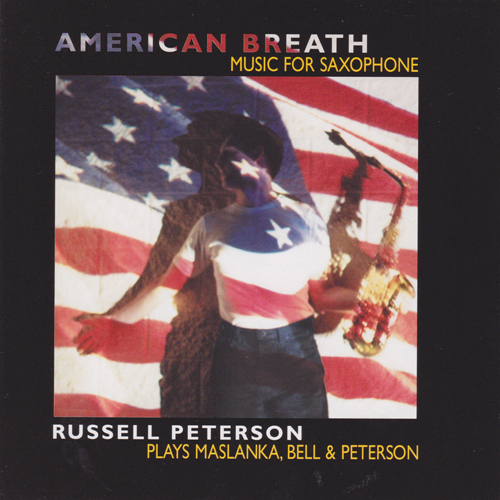
American Breath Album Cover

American Breath – Music for Saxophone

American Breath - Music for Saxophone

Description

Barking Dog Records (BDR2181)

Mahler In Blue Light
Russell Peterson, saxophone
Douglas Schneider, piano
Diane Tremaine, cello

Stream/Buy
Publisher
Mahler in Blue Light is published by Universal Edition
Program notes

Larry Bell – Mahler in Blue Light

Mahler in Blue Light was completed in June of 1996 for a commission by World-Wide Concurrent Premieres and Commissioning Fund, Inc. Kenneth Radnofsky, the executive director, suggested the instrumentation and facilitated dozens of simultaneous premieres on December 8, 1996.

“Mahler in Blue Light” opens in the altissimo range with the highest note of the piece, concert F. This striking gesture returns at the end of the Fantasy, just before the introduction of the fugue; in the third movement prior to the introduction of the quote; and in the last movement before the coda.

All four movements are an elaborate passacaglia (variations on a chord progression) based on a twenty-seven-bar instrumental fragment from “Der Abschied” movement of Mahler’s Das Lied von der Erde. The only time the fragment appears in its original form here is toward the end of the third movement, called “Variations on a Theme by Mahler.” My goal was to present the quoted material in a stylistically seamless fashion, so much so that if you did not know the original beforehand, you would not recognize it as a quote here.

The “Abschied” theme used as the basis of these variations consists of a chord progression whose principal bass notes are Bb, Cb, G, Ab, and F. These same notes are also a melody (one Mahler did not write) that acts as a original cantus firmus in each of these movements. It is also my fugue subject. The compositional objective was to make something new out of something old. I thought of this piece as my own portrait of Mahler’s music seen through the saxophone’s blue color.

Sample Pieces
Hansel and Gretel Album Cover

Hansel and Gretel

Hansel and Gretel

Description

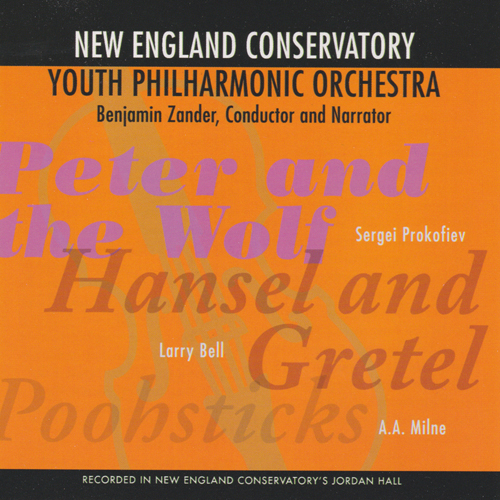
Peter and the Wolf
Hansel and Gretel
Poohsticks

Benjamin Zander, conductor/narrator
New England Conservatory
Youth Philharmonic Orchestra

1. Peter and the Wolf 26:41
2. Hansel and Gretel 30:23
3. “Poohsticks” 20:19

Stream/Buy
Program notes

Hansel and Gretel, a Fable for Narrator and Orchestra, Op. 59, is based on the classic Grimm fairy tale. The children in the original story do not lose their way in the forest, but, much more scarily, are deliberately abandoned by their starving stepmother and father. Both children-especially Gretel-triumph as the heroes of their perilous adventure.

This piece, written in August 2001, was commissioned and designed to introduce the instruments of the orchestra to children under the age of twelve. As the narrator tells us, various instruments represent the characters of the story. The French horns play the father’s music, the stepmother is played on a muted trumpet, Gretel is represented by the violin and Hansel by the cello. Three friendly animals are heard in the woodwinds: with a tip of the hat to Prokofiev’s Peter and the Wolf, their cat is played by the clarinet, the bird is played by a flute, and the duck by the oboe. The wicked witch is heard on the xylophone.

In addition certain elements of the story are painted by the music. For example, the jewels the children find shine in the orchestra. The evil step-mother and the witch share the interval of a tritone, and both have similar motives drawn from a half diminished seventh chord. The father’s music centers around c minor, and the music for Hansel and Gretel is closely related to G major.

Hansel and Gretel, finished in August 2001, was commissioned by New England Conservatory Preparatory School, Mark Churchill, Dean. It was written with the instrumentation of the Youth Philharmonic Orchestra and with its conductor, Benjamin Zander, in mind. They gave the world premiere at New England Conservatory’s Jordan Hall, November 3, 2002. I also arranged the work as a Suite for Piano, Op. 65, for intermediate piano students.

-Larry Bell Hansel and Gretel is published by Casa Rustica Publications (BMI) ©2001 Larry Bell

The Book of Moonlight Album Cover

The Book of Moonlight

The Book of Moonlight

Description

(N/S R 1033)

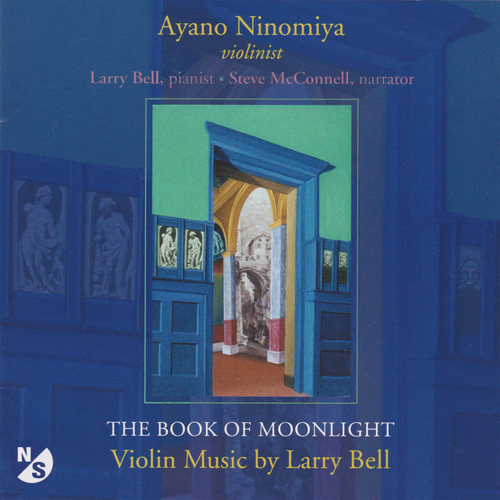
Ayano Ninomiya, violin
Larry Bell, piano
Steve McConnell, narrator

Text

The Book of Moonlight, op. 31

The best analogy for the structure of the 22-minute piece is the so-called “concept album,” a continuous set of songs based on one theme moonlight in music. The title of the work is taken from the Wallace Stevens poem The Comedian as the Letter C where, on approaching Carolina, the comedian reflects, “The book of moonlight is not written yet nor half begun.” This work is a set of nocturnes that refer to other music, both popular and classical, that center around the theme of moonlight.

The melody for “Carolina Moon” was written when the composer was fifteen years old; only at its end is the familiar song quoted. John Lennon’s opening declamation of “Mr. Moonlight” is here reinterpreted by the violin introduction. The words for the title “O holy Moon” are taken from a refrain in Roger Sessions’s Idyll of Theocritus.

“Mondschein” is the nickname for Beethoven’s Sonata, here used as an accompaniment to the composer’s own melody found in his narrator, cello, and piano work The Black Cat.

“Harvest Moon” contains some hoe-down fiddle music. “Luna di Miele” is Italian for honeymoon. “Carolina Moon Revisited” reprises the original folk melody. Each of the “songs without words” is connected by episodes of ambiguous tonality. There are times, such as at the beginning, when the instruments are playing in separate time frames and their bar lines do not match up.

This work, largely composed at the Virginia Center for the Creative Arts in the summer of 1987 and completed in March 1988, was written for Peter Ciaschini, concertmaster of the Dayton Philharmonic. Vahn Armstrong gave the Boston premiere, and Ayano Ninomiya and the composer played it at Bell’s fiftieth birthday retrospective in Weill Hall at Carnegie Hall, January 17, 2002.

In Memory of Roger Sessions, op. 29

“In Memory of Roger Sessions” for solo violin was written a year after Sessions’s death, during Christmas in 1986a87 in Boston, Wilson, North Carolina, and St. Maarten, Netherlands Antilles. It was premiered by Ayano Ninomiya in April 1998.

The work consists of three short movements: “Elegy,” “Parody,” and “Dialogue.” “Elegy,” based on a theme from Sessions’s most ambitious work, the opera Montezuma, is a slow rhapsodic movement with implied counterpoint. “Parody” refers to the mocking character of the second movement as well as to its Renaissance definition, that is a form of homage paid by quoting the music of another composer. Nine of Sessions’s workscthe Black Maskers for orchestra, Symphony No. 1, Second Sonata for piano, Duo for violin and piano, Symphony No. 2, Concerto for violin and orchestra, Sonata for Piano No. 1, Symphony No. 7, and the Sonata for solo violincall identified in the score, are quoted in a seamless set of sarcastic variations. “Dialogue” is an imagined conversation between myself and Sessions much like our actual conversations. Our names are spelled as musical themes–L(A)rry (B)(E)ll and Rog(E)r (S=Eb) (E) (S) (S)ion(S)–that are presented antiphonally and simultaneously. The repeated Ebs show Sessions, as in reality always, having the last word.

Four Pieces in Familiar Style, op. 41

“Four Pieces in Familiar Style” was written for the New England Conservatory Preparatory School’s String Duo Project and first performed by Jennifer Press and Julie Thompson at the annual Contemporary Music Festival in January 1995. The four pieces are characterized by dance rhythms and their sonority is derived from the frequent use of open strings. The movement titles are: Sonata in Two Parts, Which Side are you on?, The Cat and the Moon, and Four-Voice Fugue. Ayano Ninomiya performed a tour de force by recording with herself both parts of the duo.

Just As I Am, op. 62

“Just as I am” was written in May 2002 and dedicated to Ayano Ninomiya, whose enthusiasm for our joint recording project and her lyrical, singing violin playing inspired me. It is based on the old Southern hymn “Just as I am, without one plea.” The two-movement sonata bears a superficial resemblance to Beethoven’s two-movement Sonata for Piano, op. 90. In my piece the first movement centers around G major and the second movement around E major. A fragment of the hymn is quoted Lontano, at a great distance, in a very high register both at the beginning and end of the entire piece.

Late Night Thoughts on Listening to Mahler’s Ninth Symphony, op. 35

Late Night Thoughts on Listening to Mahler’s Ninth Symphony is based on a 1982 essay of the same title by Lewis Thomas. The music, written in Boston in 1991, was commissioned by and is dedicated to violinist Joanna Jenner, who requested an unusual composition in which the violinist would also speak as a narrator. The work can also be performed with a separate narrator (as it is here). Jenner and I premiered it in August 1992 at the Bennington College Chamber Music Conference and Composers’ Forum of the East and performed it subsequently in Boston and New York.

The Lewis Thomas first-person text I selected deals with the long and fearful shadow cast by the threat of nuclear annihilation, a prospect of death of not only the earth and all of mankind, but also a “second death” of all that has ever been known and experienced. The essay makes frequent reference to music and I have incorporated several quotations, for example Brahms’s Third Symphony, Beethoven’s Grosse Fuge and the beginning of the Op. 131 quartet, the first (and last) movement of Mahler’s Ninth Symphony, and my own “The Idea of Order at Key West.” The work is based on the opening measures of the last movement of Mahler’s Ninth Symphony: These measures act as the basis for continuous variations whose effect is unrelieved conflict.

Sleep Song, a children’s piece for violin and piano, op. 18

Sleep Song, a lullaby for violin and piano, was written in Boston in 1984 for the children of friends of Verio Piroddi. It is dedicated to Piroddi and was given its premiere in March 1986 by violinist Peter Ciaschini and pianist Michael Dewart. It was arranged for viola for Bob Williams in May 2002. Both parts are designed to be played by children. In a popular song form it is meant to be repeated until the performers are lulled to sleep.

Reviews

Top 10 Classical 2003: Philadelphia City Paper

Larry Bell is a Boston-based composer with roots in the rural South. In the tradition of Ives and Copland, he incorporates vernacular American music into traditional classical forms. This album of violin music, mostly based on 19th-century church hymns, is hauntingly beautiful, but never cloying.

Philadelphia City Paper, Peter Burwasser, December 2003

Larry Bell goes to Carolina in his mind for inspiration in the title piece in this recording of haunting and unabashedly romantic music for solo violin and violin and piano. The title composition is based on the theme of moonlight or, more precisely, other popular and classical compositions that refer to moonlight. Its title comes from the Wallace Stevens poem The Comedian as the Letter C where, on approaching Carolina, the comedian reflects, “The book of moonlight is not written yet nor half begun.” Bell expertly weaves American 19th century hymns and other vernacular music into a harmonic crazy quilt of sounds that manage to be both engagingly tonal and structurally modern. “In Memory of Roger Sessions” for solo violin consists of three short movements that quote generously from Sessions’ own work and end in an “imaginary” musical dialogue between Bell and Sessions. “Late Night Thoughts on Listening to Mahler’s Ninth Symphony” is based on a 1982 essay of the same title by the great biologist and humanist writer Lewis Thomas and uses a narrator, in this case Steve McConnell, to read from Thomas’ fearful thoughts on nuclear annihilation and loss of human experience. Bell seamlessly integrates musical quotations from Brahams and Beethoven, as well as Mahler, into the piece. “Just as I am” is based on an old Southern hymn and is dedicated to Ayano Ninomiya, a violinist whose lyrical playing and conviction brings Bell’s passionate agrarian vision of modern romanticism vividly to life. To paraphrase Forrest Gump, this is one box of chocolates where you don’t have to worry about getting the taffee.

Sequenza21.com, Jerry Bowles, January 2005

Larry Bell’s The Book of Moonlight Op.31 is, according to the composer’s words, “a set of nocturnes that refer to other music, both popular and classical, that centre round the theme of moonlight”. Incidentally, the title is taken from a poem by Wallace Stevens (“The book of moonlight is not written yet nor half begun”). As is often the case in Bell’s music, the composer draws on various sources as basic material for his own compositions. In this case, a melody Carolina Moon (written when the composer was fifteen), a song by John Lennon (Mr. Moonlight) as well as allusions to a piece by Sessions, Beethoven’s Mondschein Sonata and to “hoe-down fiddle music”. This fairly large-scale piece for violin and piano actually consists of two large outer sections separated by a short interlude; and the whole, however, is remarkably held together, for all the basic material’s diversity. The first section On Approaching Carolina (in three shorter sections) thus quotes Bell’s own tune as well as John Lennon’s and Sessions’. The interlude Mondschein appropriately alludes to Beethoven and a fragment from the Mondschein Sonata is woven into the accompaniment. The third section On Leaving Carolina (also in three shorter sections) revisits what the composer describes as “hoe-down fiddle music” followed by an Italian serenade of some sort before a final restatement of the opening tune.

In earlier reviews of discs of Bell’s music, I mentioned (I think) that he studied – among others – with Roger Sessions. So, In Memory of Roger Sessions Op.29 was written a few months after Sessions’ death. It is a short suite for solo violin in three movements : Elegy (a rhapsodic fantasy based on a theme from Sessions’ operaMontezuma), Parody (a scherzo of some sort and a real compositional tour de forcequoting from nine works of Sessions, and all over in less than three minutes!) andDialogue (an imagined conversation between Sessions and Bell, whose names are spelled as musical themes, and one in which Sessions has the last word!)

Just As I Am Op.62 is a short piece for violin and piano in two movements (Risolutoand Scorevolle) based on an old Southern hymn, a fragment of which is statedLontano to introduce the first movement (this has a slightly archaic tinge) and restatedLontano as a short peaceful coda.

Four Pieces in Familiar Style Op.41 is a short suite of four duos for two violins (played here by the same player) that may be compared to Bartòk’s own Duos, i.e. as didactic pieces for younger players. I hope that they may be as popular as Bartòk’s work.

Late Night Thoughts on Listening to Mahler’s Ninth Symphony Op.35 (to give it its full title) is a piece for violin/narrator and piano that may of course be performed (as here) by a narrator, a violinist and a pianist. (To some extent, I think that it might be preferable this way.) The text is drawn from the eponymous essay by Lewis Thomas ruminating on diverse subjects such as war, death and music. The author comments on Mahler’s Ninth Symphony, but also on Brahms and Beethoven so that the music includes a number of quotes from and allusions to the music of these composers as well as from a piece by Larry Bell (The Idea of Order at Key West Op.13, a concerto for soprano, violin and orchestra composed in 1981). The music is based on the opening measures of the final movement of Mahler’s Ninth Symphony. This intensely serious and honest piece, however, does somewhat outstay its welcome (i.e. as far as this writer is concerned) because it deals with very serious concerns that possibly should have deserved a more in-depth treatment. Incidentally, Bell’s also composed another piece including a narrator (The Black Cat Op.28 – narrator, cello and piano) that may ultimately be more satisfying just because it simply tells a story. This is nevertheless a quite substantial work, and one that certainly tell us much about Bell’s love of Mahler’s music (he did so again later in his trio Mahler in Blue Light Op.43for alto saxophone, cello and piano some time later).

This generously filled release of Bell’s music for violin is rounded off by the simple, straightforward and delightful lullaby Sleep Song Op.18.

As I have repeatedly noted in earlier reviews, Larry Bell’s music is superbly crafted, always well written for the instruments, straightforward and utterly communicative. All these pieces fit that description, and the disc as a whole is very enjoyable indeed, especially when the music is played with so much conviction and commitment as here. The recording may be a bit too close for some tastes, but nothing serious enough to deter anyone from enjoying it.

Hubert Culot-Musicweb-intenational.com, April 2005

Sample Pieces
Reminiscences and Reflections Album Cover

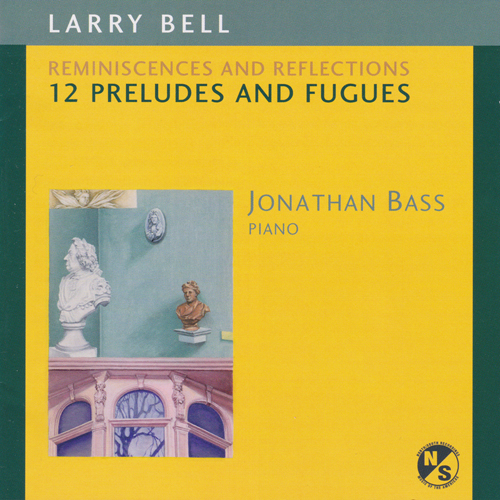
Reminiscences and Reflections

Reminiscences and Reflections

Program notes

Reminiscences and Reflections, op. 46, is a series of twelve Preludes and Fugues; one on each pitch; written intermittently over a five-year period from 1993 to 1998. Initially it operated as a kind of sketchbook for other pieces I was composing on commission. Often the fugues were written first, and the preludes was designed to reflect the harmonic content of the fugue.

The references in the title were to some of my own pieces for which I had written piano models. For example, the Prelude and Fugue in F, is largely the model for the second movement of my Concerto for Bassoon and Orchestra called The Sentimental Muse. The Prelude in C#, “Habanera,” and its accompanying fugue are elaborations on the first movement of my Song and Dance , a divertimento for chamber orchestra. Similarly, the G (“Song and Dance”), Ab (“Sing-a-long”), and A (“Last Dance”) Preludes and Fugues are the piano models for the second, third, and fourth movements of Song and Dance. The Fugue in A also provided the conclusion of Four Pieces in Familiar Style, for two violins. The Fugue in Bb is adapted from the first movement of my trio for saxophone, ‘cello, and piano, Mahler in Blue Light, “Backward Glances,” the Prelude and Fugue in F#, not only refers to my 1986 work for cello and piano, River of Ponds, but also refers to the previous Prelude and Fugue (in F).

The remaining half of the composition was written independent of my other music. The Prelude in C, “Glissando Study,” and the Prelude in Bbfor the left hand are designed as etudes. Their fugues were written to complement the etudes. Many of the Preludes and Fugues, such as the ones in D, Eb, E, and B, contain cross references to one another. For instance, the Prelude in Eb, “Habanera No. 2,” is based on the same thematic material as the Prelude in C#. The Prelude in B, “Recitative No. 2,” is a reflection of the Prelude on E. All the pieces, including the fugues, whether sketches for other works, adapted after the fact, or newly composed, were the result of my own piano improvisations.

Despite the casual and improvisatory genesis of these works, they are united by two short motives. One is a gruppetto (a turn) followed by a leap; the other is an angular five-note figure that is often presented in a jazzy, syncopated manner. The Preludes and Fugues are tonal in the conventional sense that progressions are used to gravitate to a central triad. Each pair of pieces, however, is based on harmony drawn from a different six-note collection of pitches, that is a hexachord used freely. One of the technical goals of these pieces was systematically to use all possible transpositions of these hexachords. In other words, I like to use tonal and serial techniques simultaneously.

Like the Well-Tempered Clavier, the Reminiscences and Reflections could be played piecemeal. The bi-partite construction of a prelude and fugue was obviously suggested by Bach’s famous “48.” The character of my work, however, is closer to Robert Schumann’s works with canons and the Chopin Preludes (also modeled after the Well-Tempered Clavier). I admired Schumann’s comment about Felix Mendelssohn’s Preludes and Fugues, op. 35: “The best fugue will always be the one that the public takes for a Strauss waltz; in other words, where the artistic roots are covered as are those of a flower, so that we only perceive the blossom.” Listeners today might perceive these preludes and fugues as dance music or popular songs without words; the technical aspects of fugal writing are there for the connoisseur to discover.

The world and New York premieres were given in March (in Jordan Hall) and April (in Merkin Hall) of 1999 by Sara Davis Buechner.

Text

CD Reviews: (complete)

Bell is a noted composer based at the Boston Conservatory and New England Conservatory, who has had his works performed around the world and himself performed regularly as a pianist. His Preludes and Fugues were written over a five-year period and served as a sort of sketchbook for other pieces he was writing on commission. The fugues were normally composed first and the preludes written to reflect the harmonic content of the fugue. Many of the pieces contain cross references to one another. Bell likes to use tonal and serial techniques simultaneously, and in these works gravitate to a central tonal triad, but each pair is based on harmony taken from different six-note pitch sets. His goal was to employ all possible transpositions of these hexachords. Several of the pieces show jazzy syncopations. The Prelude sections all have subtitles, such as: Glissando Study, Chase, Last Dance, etc. And of course it is to be understood that Bachís great 48 of the WTC were part of the inspiration for this collection. Fascinating and exhuberant music well worth getting to know.

—John Sunier, Audiophile Audition (June 2004)

It may be a set of prelude and fugues, but there’s nothing academic about our own Larry Bell’s new CD. Good humor and an innocent American lyricism prevail. Beyond arranging the pairs chromatically, Bell wisely decides not to chase Bach (his fugues are more Beethovenian). With the help of pianist Jonathan Bass, Bell, through song and dance, gives us a very different kind of well-tempered clavier. The Prelude and Fugue in E is a highlight. Rating: 8.

—David Salvage, Sequenza21.com April 2005

Remarkable Music *****

I’ve known this music for several years now, hearing bits of it in recitals and finaly picking up the CD shortly after its release. I keep returning to it and being amazed by it. It’s accessible enough to win listeners over at a first hearing, but subtle enough to sustain frequent returns (I finally moved it over onto the “essential” play list on my iPod because I didn’t want to be without it). The conception behind the piece recalls Bach’s Well-Tempered Clavier, but — as the composer explains — much of the execution is indebted to Schumann. The total effect, though, is completely unique. Those who know some of Bell’s other composition (and there’s an awfully lot worth getting know, beginning with the wonderful “Mahler in Blue Light”) will find familiar moments in unfamiliar contexts. Those who don’t know Bell’s work will come away wanting to know more of it. This is glorious music performed by a frighteningly gifted pianist (I’ve seen him in concert — he’s a force to be reckoned with).

James Schmidt –Amazon.com customer review, August 6, 2005

Larry Bell’s Reminiscences and Reflections Op.46, subtitled Twelve Preludes and Fugues, were composed intermittently between 1993 and 1998. The title is partly justified by the fact that the half of the set reminisces on material heard in some of the composer’s other works. For example, the Prelude and Fugue in F (No. 6) was the model for the second movement of the Bassoon Concerto The Sentimental Muse Op.45 completed in 1967 ( N/S R1031 review). The Prelude Habanera and Fugue in C sharp (No.2) are elaborations on the first movement of Song and Dance Op.44 (also on N/S R 1031), whereas the Preludes and Fugues in G (No.8), in A flat (No.9) and in A (No.10) are the ‘piano models’ of the second, third and fourth movements of Song and Dance. The Fugue in A also provided the conclusion of Four Pieces in Familiar Style Op.41 for two violins (N/S R 1033 review). The Fugue in B flat (No.11) is adapted from the first movement of Mahler in Blue Light Op.43 – Barking Dog BDR 2181 also reviewed here some time ago. Finally, the Prelude and Fugue in F sharp not only refers to River of Ponds Op.25 for cello and piano ( N/S R 1018 review) but also to the preceding Prelude and Fugue in F (No.6). The remaining Preludes and Fugues were written independently of any other music by the composer.

It would be idle to go through each Prelude and Fugue in detail. Suffice to say that the whole cycle is a very attractive and nicely contrasted set of miniatures, all superbly crafted and cast in a colourful, accessible idiom. The music can be fully appreciated without any prior knowledge of the various connections with the other pieces mentioned. Bell’s Reminiscences and Reflections Op.46 is a welcome addition to the already long series of Preludes and Fugues. It should be avidly picked up by any pianist willing to add a less familiar, but rewarding and enjoyable set to his/her repertoire.

Jonathan Bass plays superbly throughout and proves an eminent and convincing advocate of Bell’s consistently fine and attractive music.

Hubert Culot- musicweb-international.net.uk November 7, 2005

The trend in the newest “new music” towards tonal composition has elicited nearly as much alarm and dismay in academic circles as it has accolades from the public at large. One composer very much at the center of this issue is Larry Bell, who isi an academic, holding down posts at The Berklee College of Music and the New England Conservatory of Music. However — at least in his own work — Bell is not joining the ranks of composition instructors who decry that “I just can’t seem to get my students interested in new music” — meaning, of course, the mid-to-late twentieth century tendency toward formalized music systems. Bell is on the opposite track; his music is intuitive, inspired and occasionally improvised sounding but never predictable and encompasses all that is harmonic, from white note consonance to the blackest dissonance, but usually aiming for somewhere in the middle. Bell is also a pianist, and his piano technique does inform what he writes. On North/South Consonance’s Larry Bell: Reminiscences and Reflections — 12 Preludes and Fugues, Bell leaves the interpreting up to another fine pair of hands, that of pianist Jonathan Bass.Where most formalized musical systems limit the composer’s choices to permutations from a pitch class set or row, Bell opens the window and lets it all in. There are no barriers to where this music can go nor filters to strain out references to musical ideas that inspires Bell, take for example the sidelong gesture to Vince Guaraldi in the Prelude No. 7 in F sharp, “Backward Glances.” Nevertheless, etude-like virtuosity and rigorous counterpoint is the order of the day in these preludes and fugues, and that translates to a certain toughness of idiom. While there are many strikingly beautiful passages in these works that fall easily upon the ear, overall it’s an exhausting cycle to take on all at once and is not given to easy memorability; reasonably small strides in ingesting this work are recommended, and several listens may well be required to bring all of its virtues to the fore. It is clear, though, that Reminiscences and Reflections is built to stand the test of time, even as it is formally freewheeling and at times, discursive. For that matter, so is Charles Ives’ First Piano Sonata. Whether or not it may lead to a revolt in the academies, Larry Bell’s Reminiscences and Reflections should appeal to a remarkably wide swath of the audience ranging from enterprising casual listeners to experienced, intrepid souls looking for a way out of the serial ghetto.

Review by Uncle Dave Lewis-allmusic.com December, 2009

Sample Pieces
The Sentimental Muse Album Cover

The Sentimental Muse

The Sentimental Muse

Description

(N/S R 1031)
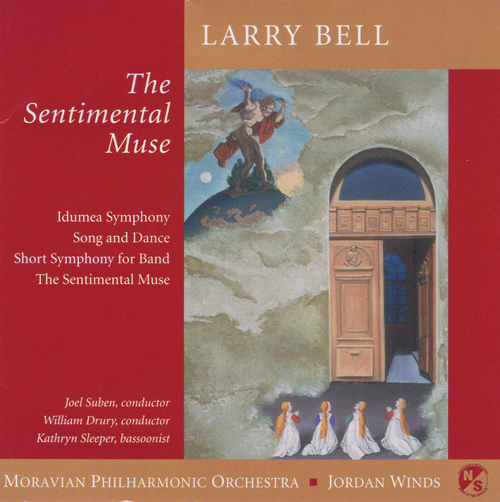
Idumea Symphony
Song and Dance
Short Symphony for Band
The Sentimental Muse

Joel Suben, conductor
William Drury, conductor
Kathryn Sleeper, bassoonist
Moravian Philharmonic
Jordan Winds

Stream/Buy
Liner notes

Idumea Symphony (Symphony No. 2), Op. 40

Idumea (pronounced I-doo_-ma) is the Biblical name of a hymn tune taken from The Sacred Harp, an important nineteenth-century hymn book used widely in the South. The first line of text asks the haunting question, “And am I born to die?” These words and the awestruck concluding text “… and see the flaming skies” provided philosophical and imagistic points of departure for the music composed for the Symphony.

The Idumea Symphony is in four movements corresponding to the Classical number and pacing of movements. The first movement, a monothematic sonata form in the tempo of a slow waltz, incorporates the borrowed hymn tune with my own harmonization. Here the character is visionary and ecstatic. The second movement, Transcendental Scherzo, has two distinct tempos: one a swinging, jazzy scherzo that parodies the hymn tune, and the other a slow-moving version of the scherzo material written in a distant tonality. This second movement prophesizes the ominous fourth and last movement. Double Variation formally describes the third movement’s alternation between an original melody and the hymn tune. The finale has a punning subtitle “What Goes Around Comes Around.” The hymn tune is used here as the basis for “rounds” with rock-inspired rhythms culminating in a driving upbeat conclusion.

The Idumea Symphony was completed in the fall of 1996 with the help of a residency at the Virginia Center for the Creative Arts. The work is dedicated to its commissioner and the orchestra who premiered it: Jed Gaylin and the Hopkins SymphonyOrchestra.

Song and Dance, a Divertimento for Chamber Orchestra, op. 44

Song and Dance was commissioned by Fred Cohen for his Currents ensemble at the University of Richmond. Written during the last two weeks of 1996, it was completed on New Years’ Eve 1996. The work was scored originally for an ensemble of thirteen soloists: woodwind quartet, brass trio, string quintet, and piano. The stringed instruments have been increased for the orchestral recording.

The titles of the work’s four movements–First Dance, Sing-a-long, Call and Response, and Last Dance–give the listener a sense of the popular style, or vernacular idiom, that influenced the composition. The titles also suggest a kind of participation asked of the listener; an invitation to sing and dance with the performers.

The phrase “Song and Dance” can also mean a put-on, something not quite what it appears to be. This Song and Dance is partly wistful, partly comic, playfully criss-crossing the border between seriousness and fun.

Short Symphony for Band, op. 47

Short Symphony for Band was completed and premiered (by the Boston Conservatory Wind Ensemble) in the winter of 1999 and was written for William Drury and the Jordan Winds. The title is derived from two pieces I have long admired: the Short Symphony by Aaron Copland and Symphony for Band by my teacher, Vincent Persichetti.

As was the case with my first two symphonies, Sacred Symphonies (also recorded on CD) and Idumea Symphony, this work was developed from my own vocal music. “A Cry Against the Twilight,” eight madrigals (SSATB) on texts by Wallace Stevens that I wrote in 1996, furnishes the primary thematic material for this four-movement work. The five madrigals I used were “Valley Candle,” “Death of a Soldier,” “Tea,”†”Infanta Marina,” “Sonatina to Hans Christian.”

The form of the Short Symphony for Band resembles a classical symphony in its movement order: sonata, scherzo, slow movement, and rondo. In addition, themes from movements are foreshadowed or recalled. For example, the second theme group of the first movement foreshadows the third movement, and the trio of the third movement’s scherzo returns just before the climax of the fourth movement’s finale.

The use of one player per part gives this symphony a sonority much like chamber music, a quality somewhat different from what one usually associates with music for band.

The Sentimental Muse, a Concerto for Bassoon and Orchestra, op. 45

The Sentimental Muse was composed during the last three weeks of July 1997 and is dedicated to its commissioner, Kathryn Sleeper. She premiered the work in April 1998 with the University of Miami Orchestra, her husband Thomas Sleeper conducting.

The music is based on two different melodies. One of these melodies was used as the Prelude and Fugue in F in my set of 12 called “Reminiscences and Reflections” (also available on CD). The other melody, a little sentimental tune, was for me like a muse who followed me around until I could no longer resist her compelling song. The piece is therefore about the relationship between these two melodies.

The first movement is in sonata form. Its contrasting sections are interrupted by lyrical cadenzas from the solo bassoon. The second movement is in the form of an arch: The central sentimental tune is flanked by fast, syncopated dance sections that are in turn framed by a plaintive song. The last movement transforms the opening movement’s character; for example, the resolute rhythms of the first movement are brought back in the last movement as vivacious, lilting rhythms. After the climax the music once more glances back wistfully to the sentimental tune of the second movement.

The opening forte A’s are a reference point in each of the three movements. In the first, the note A is the fifth in the d-minor imperfect cadence. In the second, the A is the cadence note in the original “song” in F major as well as in the f#-minor tune that occurs midway. The bassoon has the last word with its contra A affirming the dotted rhythm of the sentimental song.

Liner notes by Andrea Olmstead and the composer


Reviews

Hubert Culot, MusicWeb.uk (March 2004)

Over the last few months, I reviewed several recordings of works by Larry Bell. At that time, I remarked that this composerís music was the direct heir of Copland and, as such, presented a sort of present-day Americana. None worst for that, I must say, for he is a composer who wants to communicate in direct terms, regardless of any current trends and fashions. Though fairly traditional, his music approaches the American symphonic tradition in a most refreshing way, which is to my mind his most endearing quality. The four orchestral works here are all fairly recent and were composed over the years 1996-1999. They confirmed my first impression, although listening to his Second Symphony also brings Virgil Thomson and his popular Symphony on a Hymn Tune to mind. Indeed, Bellís Symphony No.2 “Idumea” Op.40 is based on a Southern hymn tune which runs throughout the symphony, albeit in hugely varied guise. The first movement, a “monothematic sonata form” (the composerís words) mostly based on the hymn tune, is followed by a perky Scherzo. The slow movementDouble Variations alternates an original tune and the basic hymn tune, whereas the final movement is a lively rondo.

Song and Dance Op.44, subtitled Divertimento for Chamber Orchestra, is a more relaxed and lighter work indulging in popular dance music. A delightful, unpretentious work to be enjoyed for what it is worth, that could (should) become a popular concert opener.

The very title of the Short Symphony for Band Op.47 obliquely pays some tribute to two works that Bell admittedly admires, viz. Coplandís Short Symphony and Persichettiís Symphony No.6 Op.69 for band. (Persichetti was one of Bellís teachers, Roger Sessions was another.) Again in four short movements, based this time on five madrigals composed in 1996 to texts by Wallace Stevens, this is quite appealing.

The Sentimental Muse Op.45 was commissioned by Kathryn Sleeper who gave the first performance in 1998. The composer tells us that it is mostly based on two melodies. One of them appeared in Bellís set of twelve preludes and fugues for pianoReminiscences and Reflections Op.46 (available on North/South N/S R 1032, to be reviewed shortly) whereas the second is “a little sentimental tune”. The first movement, roughly in sonata form, makes play of these tunes, as does the third movement which also briefly glances back at the “sentimental tune”. There are not that many successful bassoon concertos around, so Bellís essay is a most welcome addition to the repertoire.

These attractive and enjoyable pieces are all well served by very fine performances and recording. If you are in tune with the American symphonic tradition of Copland, Piston or Thomson, then Larry Bellís superbly crafted music is for you. Anyway, this beautifully produced release is the best possible introduction to his music and may safely be recommended.

Sample Pieces
Shadow Box Album Cover

Shadow Box

Shadow Box

Program notes

Five Contemporary Classics for Solo Guitar

(PN 00713)

Five Comtemporary Classics for Solo Guitar by Walton, Wheeler, Hand, Piazzolla, and Larry Bell’s Celestial Refrain

John Muratore, guitar

Shadow Box
1-5. Five Bagatelles
6. Shadow Box
7-9. Trilogy
10. Celestial Refrain
11-15. Cino Piezas


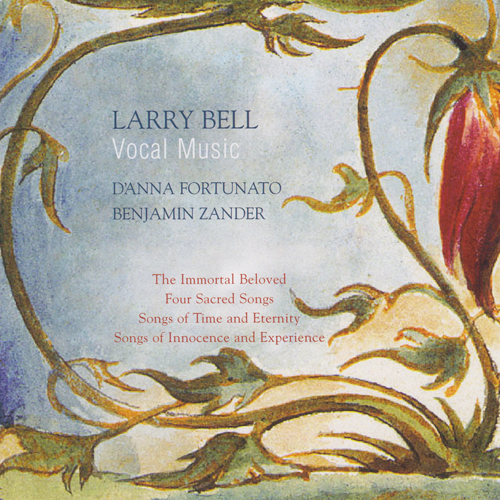
Vocal Music Album Cover

Larry Bell Vocal Music

Larry Bell Vocal Music

Description

(TROY741)
D’anna Fortunato, mezzo-soprano
Larry Bell, pianist
Benjamin Zander, conductor
Jean Meltaus
New England Conservatory Youth Philharmonic Orchestra
Children’s Chorus

Reviews

I have already been able to review a number of recordings of Larry Bell’s orchestral and chamber music. This is however the first disc featuring his vocal music and including works from both ends of his composing career.

The earliest work here, Four Sacred Songs Op.20, composed in 1984, was written “as studies for a larger orchestral work”: Sacred Symphonies Op.23 available on VMM 3016 reviewed here some time ago. Each song is a setting of a familiar – to American ears at least – hymn tune text. As might be expected, these settings are generally simple and straightforward, as befits the popular origin of the texts. The composer can nevertheless take one by surprise, as in the inconclusive coda of the overtly optimistic second song, whereas the third song Stand up, stand up, for Jesus is considerably more tense and harmonically more astringent. The final song, in much the same vein as the opening one, provides an appeased, meditative conclusion.

The Immortal Beloved Op.50 is based on the three letters that Beethoven wrote to Antonie Brentano in July 1912. The music is “permeated with references to Beethoven’s cycle An die ferne Geliebte” briefly quoted at the very end of the third and final song. This is not the first time that Bell has written a piece inspired by or alluding to older composers’ life and works: Mahler puts in an appearance in the trio Mahler in Blue Light Op.43 and Late Night and Thoughts Op.35. By so doing, he somewhat puts himself in the shade although his own personality is by no mean obliterated. Bell nevertheless stays somewhat in the background, particularly in this song-cycle.

The third song-cycle recorded here is more recent still. Songs of Time and Eternity Op.64 sets words by Emily Dickinson. The composer says that “songs 2, 3 and 4 are preoccupied with the afterlife and a healthy religious scepticism” whereas “the perspective of songs 1 and 5 ranges from a childlike wonder about the future to an adult’s obsessions with romantic memory”. Sorry for this long quote, but these words perfectly sum up the emotional and poetic content of the cycle. As a consequence, the music is remarkably varied and contrasted, at times disarmingly simple in the beautiful first song Will there really be a “Morning” which brought Samuel Barber to mind. It is slightly ironic in the second song Going to Heaven!, utterly serious and dramatic in the third song – probably the most classically conceived of the entire cycle – somewhat troubled in the fourth song (hints of John Ireland here) and warmly lyrical in the beautifully moving final song.

The most striking characteristic of these three song-cycles is the singer-friendly, expressive vocal writing that flows almost effortlessly, with telling effects in spite of some deceptively simple inner logic.

Larry Bell’s gift for memorable tunes is again put to good use in Songs of Innocence and Experience Op.55, a joint commission from the New England Conservatory Preparatory School and the Boston Modern Orchestra Project. Ii is scored for children’s chorus and orchestra, although there also exists a version for soprano and piano (Ten Poems of William Blake Op.53). The work falls into two parts of clearly different character: Songs of Innocence and Songs of Experience. The former is appropriately lighter in mood and playful, whereas the latter is more serious and weighty, with at its centre a solo setting The Sick Rose as well as a splendid treatment of The Tyger. The cantata concludes with a beautiful setting of The Voice of the Ancient Bard. The music is supremely crafted for young performers yet with enough to challenge their performing skills and make it worth the effort. Just listen to what these youngsters make of the often tricky rhythms of Spring. The two solo items, Infant Joy in the first part and The Sick Rose in the second part are sung with considerable aplomb. This is a very attractive work, much in the same vein as Howard Blake. It generously repays its young performers’ efforts and makes for a most rewarding experience for players and listeners alike.

With the pianist-composer in command, these readings of the three song-cycles have a definite ring of authenticity, and are warmly recorded. The energy and commitment of the young performers in the Blake cantata is slightly let down by what I think is a live recording, though the recorded sound is quite acceptable. This does not in any way diminish their formidable achievement.

In short, a generously filled release that sheds light on another facet of Larry Bell’s varied output. As I have already mentioned in earlier reviews, his music is tuneful, colourful, expressive and inventive for all its classical layout.

Hubert Culot-www.musicweb-international.com (March 2006)

The neo-tonal music of Larry Bell evokes sharply different reactions from critics, as illustrated by the back-to-back reviews by Thomas McClain and Mark Lehman (M/A 2004). At the risk of sounding bland, I have a view somewhere in between. There is no denying the brightness and tunefulness of this resourceful composer, but his music can wear thin after a while.

The program of songs offers a bit of variety an that it traverses the robust tonality of Bell’s present style (The Immortal Beloved) as well as the stormy dissonance of his earlier one (Four Sacred Songs). Some of the songs here (Will there Really Be a Morning?, from Songs of Time and Eternity) are close to pop or Broadway. Bell certainly knows how to spin a lyrical line (Heart! We Will Forget Him!); he remains a formidable force on the tonal side of the contemporary divide.

Mezzo D’Anna Fortunato is a bit wobbly for my taste; the orchestra under Benjamin Zander and choruses under Jean Meltaus have a bright, vibrant sound admirably suited for the child-like Songs of Innocence and Experience.

Jack Sullivan-American Record Guide May/June 2006

Sample Pieces
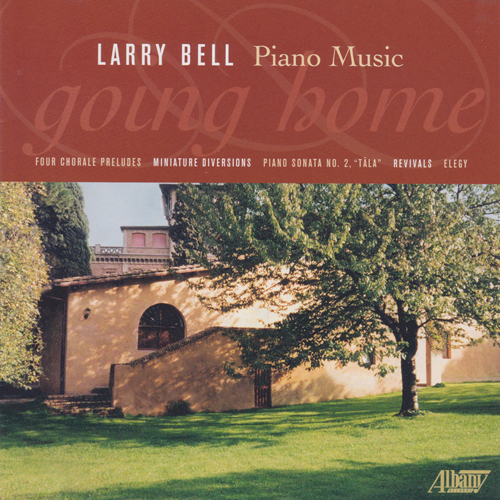
Going Home Album Cover

Going Home – Solo Piano Music

Going Home - Solo Piano Music

Description

(Troy 828)
Four Chorale Preludes
Miniature Diversions
Piano Sonata No. 2, “TALA”
Revivals
Elegy
Larry Bell-Piano

Stream/Buy
Program notes

String Quartet No. 3 (Homage to Beethoven), op. 71, was commissioned by artist Fay Chandler for the Borromeo String Quartet, who premiered the work December 11, 2005. For a few years first violinist Nicholas Kitchen and I had had informal discussions about my writing a new piece for the Quartet. Always in agreement about we did not want in a new work, we shared a fanatical obsession with the quartets of Beethoven. After hearing the Borromeo Quartet perform three late Beethoven quartets in the fall of 2004 at the Gardner Museum, I began this new work with a fresh sense of purpose.

As the subtitle Homage to Beethoven suggests, my quartet owes a great debt to Beethoven’s last five quartets, in particular Opp. 131 and 132. My seven-movement, arch-like structure, with its opening fugue and central variations flanked by two scherzi, mirrors the structure of Beethoven’s Op. 131. The use of double variations
and two brief cadenzas, first for cello and later for violin, resembles the Lydian-mode movement (III) and the virtuosic solo violin writing in Op. 132. Unlike Beethoven’s characteristic confrontation with fate, however, a sense of lightness and humor pervades this work. No attempt at quotation is made here. Instead, I wished to pay tribute, in my own way, to the music that has continually sustained me as a listener and that has always inspired me to a higher level of compositional achievement. The character of the music represents my own particular synthesis of tonality, lyricism, and polyphony that grew out of a love for both string instruments and the human voice. Writing a string quartet (or a symphony) brings enormous challenges because of inevitable comparisons between works of the present and the great string quartet repertoire of the past. Unlike some composers of the post-World War II generation, however, I have never sought to break with the past and its compositional and performance traditions. In fact, it became both relatively easy and a joy to write this work once I realized that I could, in effect, write music outside recent avant-garde traditions.

I wrote String Quartet No. 3 in October of 2004. Over twenty years had elapsed since the composition of my String Quartet No. 2 (premiered by the Columbia Quartet in New York in 1982) and thirty years since my String Quartet No. 1 (premiered by the Juilliard String Quartet in 1976). By the fall of 2004 a unique convergence of time, people, and place made the composition of a new quartet feel inevitable. To have performers such as the Borromeo String Quartet, who play with such verve, passion, commitment, and attention to detail, would inspire any composer. They certainly inspired me. In performance, their seriousness of intent–in this most serious of all chamber music genres–was an impetus to compose a work that for over a generation I had imagined writing.

CELESTIAL REFRAIN FOR GUITAR, OP. 24, was commissioned by Russell Southcott and Steven Walter and was completed, with the aid of a grant from the Rockefeller Foundation, in July 1985 at the Rockefeller Foundation’s Study and Conference Center in Bellagio, Italy. The work is a double variation based on two different themes; one is slow and dramatic and the other fast and dance-like. The centerpiece is a song drawn from my Sacred Symphonies based on the words “Spirit of God Descend Upon My Heart.” As the piece unfolds these themes become more alike in shape and character. Guitar Review described the piece as “eleven pages of great music… folk-like, at times almost primitive, yet always rich in ideas and inventiveness… [it] will haunt both your mind and your heart.”

TARAB FOR 8 CELLOS, OP. 66, WAS COMMISSIONED for the Tarab Cello Ensemble in 2003 by its founder, Florent Renard-Payen. In three large sections, the work was conceived as a concertino for two cello quartets. Tarab is one of my most experimental pieces of recent years. Here I combine my interest in using high-ratio polyrhythms to articulate the background phrase structure with a new emphasis on working with a large harmonic vocabulary. Two quartets begin by sharing similar characteristics. By the second section the quartets operate entirely in opposition; while one quartet plays slowly and expressively, the other plays resolute and dance-like music. The antiphonal call-andresponse between the two quartets reaches its climax at the end of the second section, where all eight cellos play one phrase in unison. In the third section each cello plays a short cadenza. Little by little these solos form duets, then trios, and, finally, the initial quartet juxtaposition of sharing similar characteristics is reestablished. The overall shape of the work is one of growing tension, catharsis, and resolution leading the listener–it is hoped–to a state of ecstasy, or ‘tarab.’

–Liner notes by Larry Bell

Reviews

Music for Strings CD Review

Larry Thomas Bell: String Quartet No. 3 (Homage to Beethoven); Celestial Refrain; Tarab; Albany TROY986; Borromeo Quartet, John Muratore, Tarab Cello Ensemble (60:01) A number of recordings are available of the chamber and orchestral music of American composer Larry Bell (b. 1952). However, this new Albany disc, containing three works, is the best single-disc introduction to his work currently available. It is a magnificent release that displays well the vitality and creativity of Bell’s music. Resident for many years in Boston, Larry Thomas Bell is on the faculty of the New England Conservatory and the Berklee College of Music and taught for a number of the years both at Boston Conservatory and the Juilliard School. A student of Vincent Persichetti and Roger Sessions, Bell has been awarded the Rome Prize and fellowships from the Guggenheim and Rockefeller Foundations. Though he has composed a number of orchestral works, he is best known for his personal and compelling works for chamber ensemble and solo forces (particularly his own instrument, the piano), some of which such as his Mahler in Blue Light, op. 43 (1996) have become modern classics.

Each of the three works on this Albany release represents one of the musical “strains” that runs throughout the composer’s entire catalogue and comprise the elements of Bell’s personal style. String Quartet No. 3 (Homage to Beethoven), op. 71 (2004) showcases the stylistic connection that Bell’s music makes with the past, particularly the music of the Romantic period. Celestial Refrain, op. 24 (1985) for solo guitar, draws upon the sounds and idiom American folk hymnody, particularly those hymns of the South that Bell heard as a child and began incorporating into his music (both through direct quotation and through original material in a similar style) in the 1980’s. Finally, Tarab, op. 66 (2003) for double cello quartet, draws upon the complexities of rhythm and temporal proportions (inspired, in Bell’s case, by the music of Elliott Carter, but presented within a more accessible, and largely diatonic musical language than Carter uses). Nearly every one of Bell’s compositions draws upon these different elements to greater and lesser extents, and this single release showcases three of Bell’s pieces in which these elements are each presented clearly and synthesized into Bell’s stylistic voice.

The extended String Quartet No. 3 (Homage to Beethoven) pays tribute to Beethoven’s music (particularly the late string quartets) in its structural and developmental complexities. The seven movements of the work, however, explore a very different emotional terrain from Beethoven’s own late quarters. In his notes on the work, Bell remarks on the sense of “lightness and humor” that pervades the work. It is a piece full of rich, beautiful textures that is performed exquisitely by the Borromeo Quartet.

Celestial Refrain, performed by guitarist John Muratore, is a set of “double” variations upon folk-like hymn material (two contrasting ideas, one slow and one fast), originally from the composer’s orchestral work Sacred Symphonies. In this work, Bell achieves a perfect balance between stasis and activity and presents musical material that is tuneful and memorable.

Tarab is named after its commissioners, the Tarab Cello Ensemble, and takes its title from the term within Islamic music implying a sense of ecstasy, usually derived from the rhythmic experience of music. Bell describes the piece as articulating his interest in “high-ratio polyrhythms”, which he exploits by setting up a contrasting and referential textures between the two cello quartets. As is true with the best of Bell’s “rhythmic experiments”, they are deployed in service of an exceptionally musical impulse; the listener needs to know nothing about polyrhythms to enjoy the “sacred space” that Bell creates.

These three superlative works are representative of what this reviewer believes is the best sort of new music being written today—accessible, yet sophisticated. On a first listen, the listener is seduced by the beauty of sounds and melodies and clarity of textures. On subsequent listens, one continues to discover further treasures in the unfolding of internal references and the organic sense of musical development that Bell employs.

This disc was a highlight of the myriad new discs of American released in 2007 and certainly the best new release of chamber music that I heard all year. Strongly and urgently recommended.

– Carson Cooman, Vol. 22 / No. 2 the journal of the Living Music Foundation Spring 2008

Sample Pieces
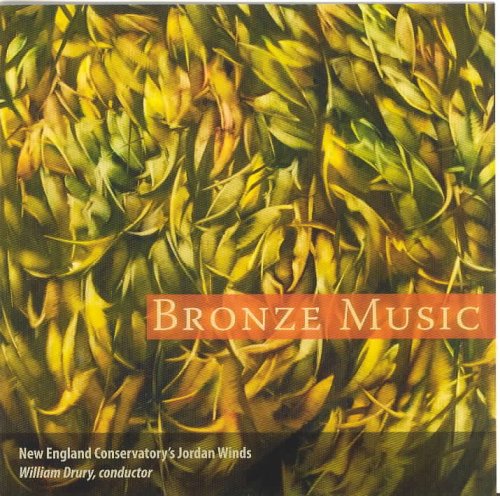
Bronze Music Album Cover

Bronze Music

Bronze Music

Description

New England Conservatory’s
Jordan Winds, William Drury-conductor
(Troy 913)
Larry Bell: Short Symphony for Band

also on this CD:
Gerald Levison: Mountain Light and Bronze Music
Linda Dunsman: Solstice
Joshua Feltman: Kubla Khan
Malcolm Peyton: Two Fantasies for Winds, Brass, and Percussion
David Macbride: River Dance
Peter Child: Fanfare